Anxious Meets Avoidant: The Most Common (and Most Painful) Pairing in Arranged and Love Marriages
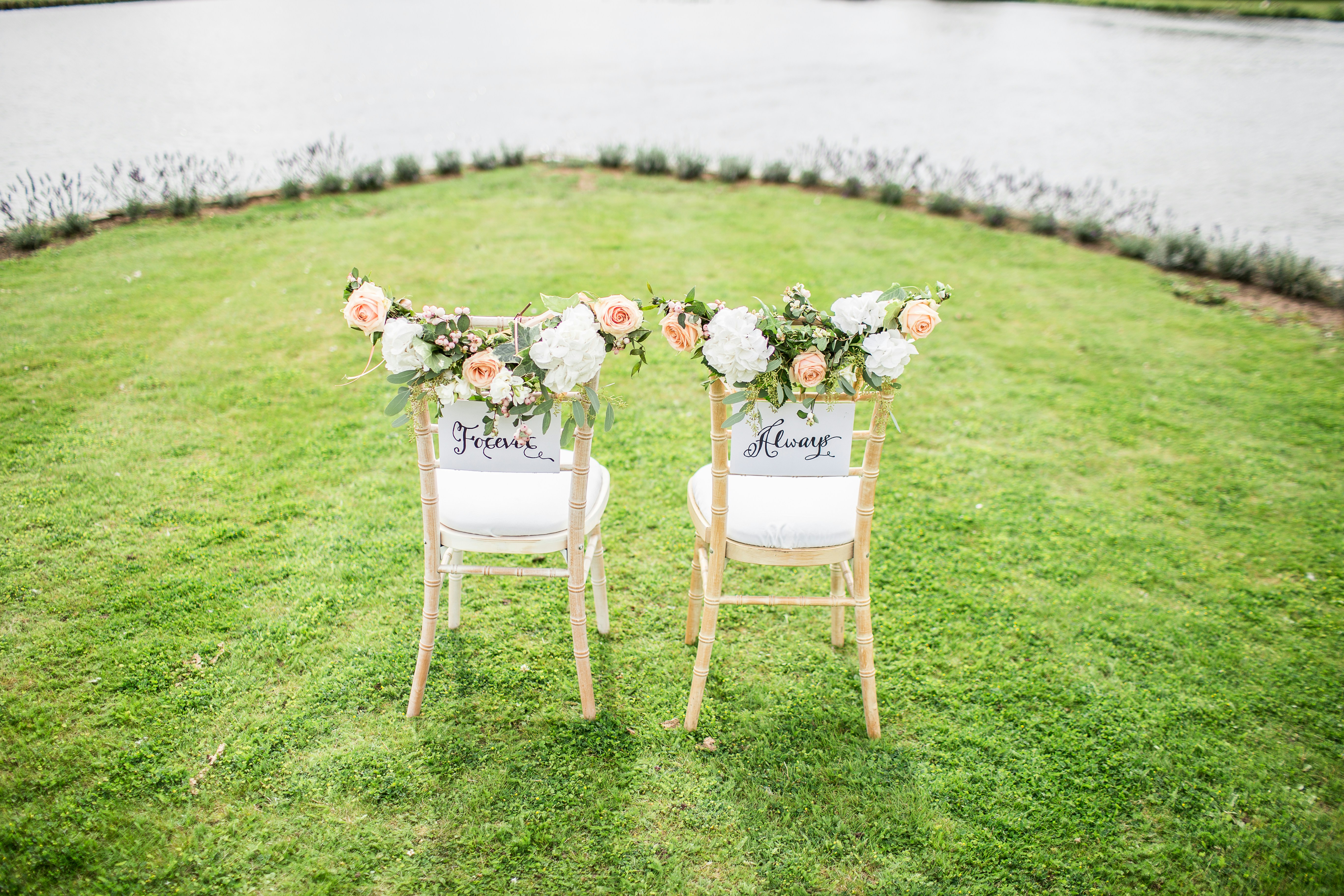
"The anxious-avoidant trap is one of the most common — and most painful — dynamics in relationships."
Ask around, and you'll hear some version of this story from almost every third couple: "I felt like I was always chasing, and they always seemed to be pulling away." Or the mirror image: "I felt suffocated. Every silence became an accusation."
This isn't a coincidence, and it isn't really about compatibility of interests or family background, though those get blamed the most.
It's a well-documented pattern in relationship psychology called the anxious-avoidant trap, and it happens to be one of the most common pairings that forms, in both love marriages and arranged introductions, precisely because the two styles are drawn to each other in a way that feels intense and meaningful, right up until it becomes exhausting.
How are Anxious and Avoidant Attachments Similar
Anxious attachment and avoidant attachment look like opposites on the surface, but they usually come from the same root: a childhood where closeness and safety weren't reliably connected. The difference is in the strategy each person developed to cope.
Anxious Attachment
Someone with an anxious attachment style learned, early on, that attention and affection had to be worked for, watched for, sometimes fought for. As an adult, that can show up as a heightened sensitivity to any sign of distance — a delayed reply, a shorter-than-usual phone call, a partner who seems a little preoccupied.
potential threats
The anxious partner's nervous system reads these as potential threats to the relationship, even when nothing is actually wrong, and the instinct is to close the gap fast: more texts, more questions, more 'are we okay?'
Avoidant Attachment
Someone with an avoidant attachment style learned something close to the opposite: that needing people too openly led to disappointment, so independence became the safer strategy. As an adult, this often shows up as genuine discomfort with emotional intensity; not because the person doesn't care, but because closeness itself can feel like a demand they're not sure they can meet. When a partner gets more anxious or more intense, the avoidant instinct is to create space: pull back, go quiet, get busy, need 'time.'
Put these two people in a relationship together, and you get a self-reinforcing loop. The anxious partner senses distance and reaches out harder. The avoidant partner senses the intensity of that reaching and pulls back further to cope with it. The anxious partner senses the retreat and panics more. And so on, each person's coping mechanism directly triggering the other's.
Why Do Anxious and Avoidant End Up Together So Often
It would make sense, in theory, if anxious people mostly ended up with secure people, and avoidant people did too. But that's not usually what happens, and there's a reason for it that isn't flattering to either style: familiarity feels like chemistry.
An anxious person, used to relationships that require effort and vigilance, can find a securely attached partner's steadiness almost boring: nothing to chase, nothing to prove, no drama to read meaning into. An avoidant partner's inconsistency, on the other hand, feels oddly magnetic, because it recreates the emotional terrain the anxious person's nervous system already knows how to operate in. Meanwhile, an avoidant person, uncomfortable with too much steady closeness, can find a secure partner's consistent warmth strangely intense or even suspicious — "Why is this person so into me?" — while an anxious partner's pursuit feels, at least at first, flattering and clarifying: someone who clearly wants them, so they don't have to do the work of initiating closeness themselves.
Neither person consciously chooses this. It just tends to feel like intensity, like "real" chemistry, and both people mistake that intensity for compatibility.
How This Shows Up Specifically in Indian Marriages
In arranged introductions, the anxious-avoidant dynamic gets an extra layer of fuel from the structure of the process itself. Meetings are often short, family-supervised, and compressed into a matter of weeks between "we like each other" and "let's fix a date." There's rarely enough time for either person's actual patterns to show up organically — instead, everyone is on slightly performed behaviour, which means the anxious-avoidant dynamic often doesn't reveal itself until after the wedding, when the performance drops and real patterns take over.
Phone and WhatsApp culture makes it worse. In the gap between the first meeting and the wedding — sometimes weeks, sometimes months, often with the couple in different cities — communication happens almost entirely over text and calls, which strips away tone and body language and leaves enormous room for misreading.
A delayed "seen" on WhatsApp becomes, for an anxious partner, evidence of disinterest. A partner who prefers a nightly ten-minute call over hours of texting gets read by an anxious partner as cold, and reads the anxious partner's constant messaging as overwhelming.
Family involvement adds its own pressure. An anxious partner, already sensitive to signs of rejection, can feel that pressure especially acutely — every question from relatives about "how are things going" becomes another opportunity to spiral about whether the relationship is secure. An avoidant partner, meanwhile, often experiences family involvement as one more layer of expectation pressing in, and responds by retreating further into logic, distance, and a kind of dutiful but emotionally guarded correctness.
In love marriages, the same dynamic plays out differently but no less painfully, often stretched across years of an on-and-off relationship, with one partner known within the friend circle as "the one who's always chasing" and the other as "the one who never opens up," long before anyone names what's actually happening between them.
Spotting It Early — Before the Wedding, Not After
The good news is that this pattern is genuinely visible early, if you know what to look for, and you don't need years of dating to see it.
Response to Emotional Expression
Watch how the person responds after any moment of real emotional expression — not the easy, pleasant conversations, but the ones where something slightly vulnerable or slightly tense came up. Did they lean toward it, even a little? Or did the very next message or call feel noticeably shorter, more distant, more logistical?
Your Own Reaction
If a single delayed reply or a slightly shorter phone call sends you into hours of rereading the conversation, that's worth sitting with honestly, not dismissing as 'just how much I like them.'
Conflict Handling
Anxious-leaning people tend to want to resolve things immediately, sometimes at 1 a.m., sometimes mid-argument, because unresolved tension feels unbearable. Avoidant-leaning people tend to need space before they can engage, and if that need for space isn't respected, it easily gets misread as stonewalling.
None of this means the match is doomed. It means it's useful information, gathered while there's still room to talk about it openly, rather than years into a marriage when both people have already hardened into resentment.
What Actually Helps
The anxious-avoidant trap isn't unbreakable, but it does require both people to understand what's actually happening, rather than fighting about the surface-level triggers — the unanswered text, the "you're too clingy," the "you never open up."
Name the Pattern Out Loud
Naming the pattern together tends to defuse a surprising amount of its power, because it reframes the fight from 'you don't care about me' or 'you're too much' into 'we have two different nervous systems reacting to the same moment in opposite ways.'
For the Anxious Partner
The real work is learning to sit with uncertainty without immediately needing it resolved, building enough internal steadiness that a delayed reply doesn't have to mean anything.
For the Avoidant Partner
The work is learning that space can be communicated ('I need a bit of time, but I'm not going anywhere') instead of just taken, because unexplained distance is exactly what an anxious partner's nervous system is wired to fear most.
Understanding this before marriage — while there's still room to ask honest questions, to notice these patterns in yourself and in the person you're considering spending your life with — is one of the most underused, practical forms of due diligence available.
It doesn't show up on a biodata, and no family background check will surface it. But it may matter more for how the marriage actually feels, day to day, than almost anything else on the list.
Next Steps
Reading someone's attachment patterns takes time, attention, and a bit of emotional honesty — but it isn't the only form of due diligence worth doing before marriage. There's a more straightforward, factual layer too, and it's worth checking alongside everything above.
If you're currently meeting prospective partners or comparing biodatas, prematrimonialverification.com offers a pre-marital verification service for ₹5,000 per candidate, covering:
- Identity verification — Aadhaar, PAN, and driving license
- CIBIL score and credit history
- Number intelligence — confirming the phone number actually belongs to the candidate
- Employment history — verifying where they say they work
Verify Once. Love Forever.
It's the decision of a lifetime.
Related Blogs

How Childhood Shaped the Way You Love — And What to Do About It Before You Marry
Discover how your childhood attachment style affects your relationships and what you can do about it before marriage.
Read article →
4 Essential Checks Every Family Should Do Before Marriage
Discover the essential parameters you should verify before marrying.
Read article →
The 4 Burners Theory & Why Modern Professionals Are Rethinking Marriage
Learn how the 4 Burners Theory explains the balance between work, family, health and relationships.
Read article →